Cybersecurity and AI - AICYBERSEC2026
|
Christos Kalloniatis |
Dr. Christos Kalloniatis holds a PhD from the Department of Cultural Technology and Communication of the University of the Aegean, a master degree on Computer Science from the University of Essex, UK and a Bachelor degree in Informatics from Technological Educational Institute of Athens. Currently he is a full time Professor of the Department of Cultural Technology and Communication of the University of the Aegean and director of the Privacy Engineering and Social Informatics (PrivaSI) research laboratory. He is a member of board of the Hellenic Data Protection Authority and former member of the board of the Hellenic Authority for Communication Security and Privacy. He is former head of the Department of Cultural Technology and Communication. His main research interests are the elicitation, analysis and modelling of security and privacy requirements in traditional and cloud-based systems, the analysis and modelling of forensic-enabled systems and services, Privacy Enhancing Technologies and the design of Information System Security and Privacy in Cultural Informatics. He is an author of several refereed papers in international scientific journals and conferences and has served as a visiting professor in many European Institutions. Prior to his academic career he has served at various places on the Greek public sector including the North Aegean Region and Ministry of Interior, Decentralisation and e-Governance. He is a lead-member of the Cultural Informatics research group as well as the privacy requirements research group in the Department of Cultural Technology and Communication of the University of the Aegean and has a close collaboration with the Laboratory of Information & Communication Systems Security of the University of the Aegean. He has served as a member of various development and research projects. He lives in Mitilini, the capital of Lesvos island along with his wife Liana and his daughters Elpiniki and Irene. |

|
Steven Furnell (University of Nottingham, UK) |
He is Professor of Cyber Security in the School of Computer Science at the University of Nottingham, as well as an Adjunct Professor with Edith Cowan University in Western Australia and an Honorary Professor with Nelson Mandela University in South Africa. I am also the UK Representative to Technical Committee 11 (Security and Privacy Protection) within the International Federation for Information Processing, as well as a board member of the Chartered Institute of Information Security and chair the academic partnership committee. |

|
Sebastian Heil |
Sebastian Heil is a Senior Researcher (tenured) at the Distributed and Self-organizing Systems Group at Chemnitz University of Technology. His research is in the field of Web Engineering and focuses on trustworthy and human-centric AI-driven methods for the analysis and creation of web user interfaces, technologies for web-based frontends, as well as interaction aspects in the context of conversational user interfaces and Web of Things. To that end, he combines his experience in Applied AI, Software Engineering and HCI to explore new methods of designing, implementing and assessing user interfaces towards a future in which humans and AI co-create and interact within the next generation of the Web. In ENFIELD, he contributes a Software Engineering/HCI perspective to the creation of trustworthy-by-design web-based systems, co-leading research activities in the Trustworthy AI research pillar. |

|
Nektaria Kaloudi (Norwegian University, NTNU) |
Nektaria Kalloudi is a Research Scientist at SINTEF Digital in Trondheim, Norway, working in the Software Engineering, Safety and Security department. Her work focuses on cybersecurity and the safety of complex software systems, with interests including cyber-physical and autonomous systems. She holds an academic background from the University of the Aegean and has also been affiliated with the University of Oslo. |

|
Sokratis Katsikas (Norwegian University, NTNU) |
Sokratis K. Katsikas was born in Athens, Greece, in 1960. He is the Director of the Norwegian Centre for Cybersecurity in Critical Sectors and Professor with the Department of Information Security and Communication Technology, Norwegian University of Science and Technology. He is also Professor Emeritus of the Department of Digital Systems, University of Piraeus, Greece. In 2019 he was awarded a Doctorate Honoris Causa from the Department of Production and Management Engineering, Democritus University of Thrace, Greece. In May-June 2023 he served as Minister of Digital Governance in the interim (caretaking) government of the Hellenic Republic. He was listed in the Stanford University list of the top 2% most cited scientists worldwide and in 2024 he was listed in the ScholarGPS Top Scholars list of the top 0.5% of all scholars worldwide. He has authored or co-authored more than 300 journal papers, book chapters and conference proceedings papers. He is serving on the editorial board of several scientific journals, he has co-authored/edited 52 books and conference proceedings and has served on/chaired the technical programme committee of more than 1000 international scientific conferences. He is a member of the Steering Committee of the ESORICS Conference (chair 2017-2023) and he is the Editor-in-Chief of the International Journal of Information Security (Springer). |

|
Georgios Kavallieratos (Norwegian University, NO) |
Dr Georgios Kavallieratos was awarded his Ph.D. in Information Security and Communication Technology by the Norwegian University of Science and Technology – NTNU in 2021. Moreover, he received the B.Sc. degree in computer science and the M.Sc. degree in digital systems security in 2016 and 2018, respectively, from the University of Piraeus, Piraeus, Greece. He is a certified ISO 27001:2013 lead auditor for information security management systems. He is currently a Senior Researcher with the Department of Information Security and Communication Technology at NTNU, Norway. Previously, he held a postdoctoral researcher position at NTNU and served as an Associate Professor in Cybersecurity of Cyber-Physical Systems with the Department of Technology Systems at the University of Oslo, Norway. His main line of research concerns topics related to Critical Infrastructure Protection and Cyber Physical Systems security, and particularly, those associated with the risk management, attack/threat modelling, and trustworthy artificial intelligence. His research interests are related to the security of cyber physical systems, in a number of application domains that include inter alia the energy, health, maritime, and space sectors. |

|
Eduard Petlenkov (University of Technology Tallinn, EE) |
Eduard Petlenkov received his PhD degree in Computer and Systems Engineering from Tallinn University of Technology. He is a Tenured Full Professor of Intelligent Control Systems at the Department of Computer Systems, Tallinn University of Technology and the Head of the Centre for Intelligent Systems. His main research interests lie in the domain of nonlinear control, system analysis, computational intelligence, fractional order systems and energy informatics. He is also actively involved in development of intelligent energy efficient control algorithms for commercial buildings. |

|
Sushma Venkatesh (Norwegian University, NTNU) |
Dr. Sushma Venkatesh holds a PhD in Information Security from the Norwegian University of Science and Technology (NTNU), Norway. She is a co-founder of an AI start-up, where she has worked as a Data Scientist. Dr.Sushma has published extensively in leading journals and international conferences and serves as a reviewer for several reputed venues. Her research focuses on trustworthy AI and biometric security, with particular emphasis on facial morphing and presentation attack detection, as well as natural language processing (NLP).
|

|
Xavier Carpent (University of Nottingham, UK) |
Xavier is an Assistant Professor in the School of Computer Science at the University of Nottingham. Previously, he was a postdoc at COSIC, KULeuven; UC San Diego; and UC Irvine. He obtained both his MSc and his PhD at UCLouvain, Belgium. He is interested in many different topics in cyber security, though much of his research in the past circled around applied cryptography, privacy, authentication, and protocols. He is also interested in other computer science topics such as optimization and data structures.
|

|
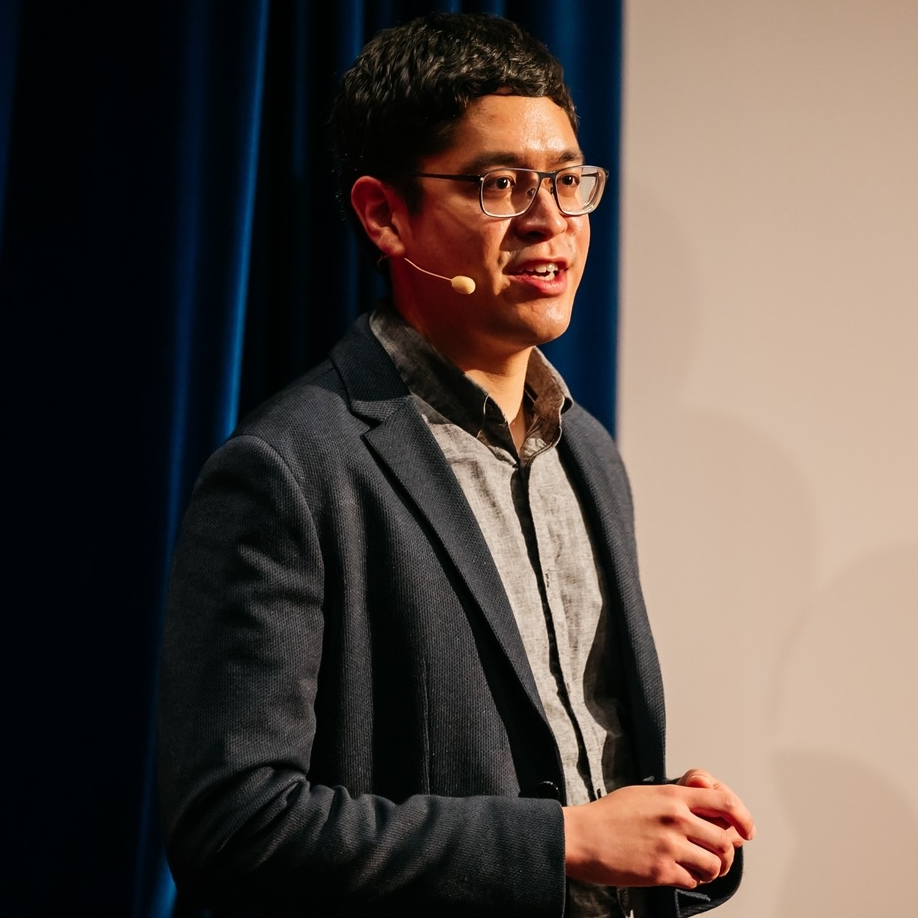
Jeriek Van den Abeele (University of Oslo, NOR) |
Jeriek Van den Abeele joined Telenor Research & Innovation as a Research Scientist in 2020, following a PhD in theoretical particle physics at the University of Oslo. During his PhD, he worked on topics including Gaussian process regression for particle cross-section calculations and genetic algorithms for computational drug development. At Telenor, he has been involved in work on using reinforcement learning for network automation and technical advisory regarding AI governance and the EU AI Act. He is currently leading Telenor’s efforts in the Horizon Europe project ENFIELD, focusing on Green, Human-centric, and Trustworthy AI research directions, including work on building defences against LLM jailbreak attacks.
|